Air Tightness Testing Northern Ireland: The Complete Guide for Builders, Developers and Homeowners
If you’re building a new home or commercial unit, air tightness testing in Northern Ireland is one of the last hurdles before building control sign-off. It’s also one of the easiest to get wrong. This guide explains what air testing involves, why it matters, and how to get a pass first time.
What Is Air Tightness Testing?
Air tightness testing (also called air permeability testing or air leakage testing) measures how much air escapes through gaps and cracks in a building’s fabric. Those leaks are often around windows, doors, service penetrations, loft hatches and floor-to-wall junctions.
Too much air leakage means heat loss, higher CO2 emissions and bigger energy bills for the people living or working in the building. That’s why air tightness testing in Northern Ireland forms part of compliance with Building Regulations Part F (conservation of fuel and power).
Why Is Air Testing Required in Northern Ireland?
Air testing in Northern Ireland is a key part of demonstrating that a new building meets energy efficiency requirements. The result feeds directly into your SAP calculation, which proves the dwelling complies with regulations and produces the Energy Performance Certificate (EPC) needed when the property is sold or rented.
A good air tightness result can also help you hit your target without over-specifying insulation or heating elsewhere, which can save money on the build.
Types of Air Tightness Testing in Northern Ireland
Fan Pressure Testing (Blower Door Test)
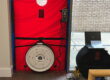
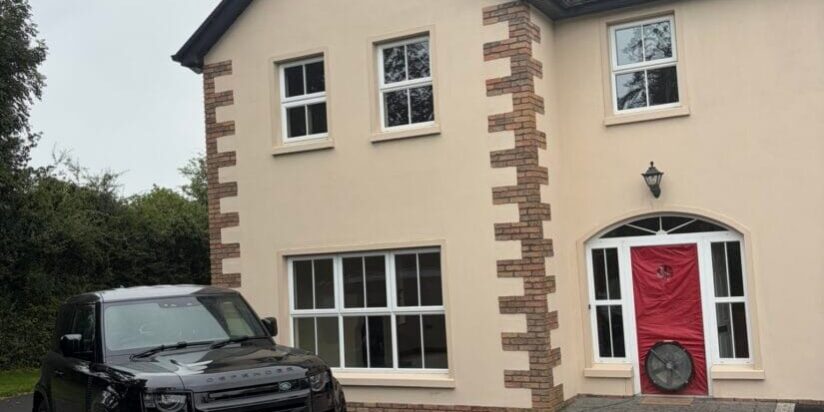
The traditional method is a fan pressure test, commonly known as a blower door test. A calibrated fan is fitted into an external doorway and used to pressurise and depressurise the building, while instruments measure how much air is needed to hold that pressure. Our fan pressure air tightness testing is carried out to ATTMA and Building Regulations Part F standards, so you get a compliant result and a clear report for building control.
Pulse Testing
Pulse testing is a newer alternative. It measures air leakage without a blower door fan and at standard atmospheric pressure, so it’s quieter and faster. It’s well suited to occupied buildings and smaller dwellings, and results are compliant with ATTMA TSL2 guidance.
When Should You Book Air Testing?
Book your air test once the building is substantially complete, meaning:
- External doors, windows and rooflights are fitted
- Service penetrations (pipes, cables, vents) are sealed
- Internal finishes that affect airtightness, such as plastering and sealing, are complete
- Temporary openings are closed up
Booking early helps. If you’re unsure whether your building is ready, a quick call to your air tightness tester can save you a failed test and a wasted visit.
How to Pass Your Air Tightness Test First Time
Most failures come from the same few problems. To give yourself the best chance:
- Plan airtightness at design stage. Identify your air barrier on the drawings and make sure every trade knows where it is.
- Seal service penetrations properly. Pipes, ducts, cables and flues are common leakage points.
- Check around windows and doors. Gaps between frames and openings need to be fully sealed.
- Don’t forget the details. Loft hatches, sockets on external walls, soil pipes and recessed light fittings can add up.
- Get an early SAP calculation. Knowing your target before construction begins means no surprises at the end. Our SAP calculations are produced from your architect’s drawings by assessors accredited with Elmhurst Energy Systems.
What Happens If You Fail?
A failed air test isn’t the end of the world, but it does cost time and money. Your tester can help you identify where the air is escaping so you can carry out remedial sealing and retest. Doing this on the same visit, where possible, avoids the cost of a second call-out.
Air Tightness Testing for Domestic and Commercial Projects
We carry out air permeability testing in Northern Ireland on both domestic and commercial buildings, from single new-build homes and housing developments to offices, retail units and industrial buildings. Whatever the size of the project, the process is the same: a clear test, an accurate result and a compliant report.
Why Choose CPL Energy Services for Air Tightness Testing in Northern Ireland?
- Experience: Established in 2004, we’ve been helping the construction industry meet energy performance requirements for over twenty years.
- Accredited assessors: Our team is professionally trained and works with recognised bodies including Elmhurst Energy Systems, Stroma and BINDT.
- One team for everything: As well as air testing, we provide Energy Performance Certificates, spillage testing and acoustic testing, so you can deal with a single point of contact.
- Clear reporting: You get a compliant report you can pass straight to building control.
CPL Energy Services Ltd
Unit 1F, The Milestone Centre, 75 Quarry Road, Carrickmore, County Tyrone, BT79 9AL
Tel: 028 8076 0819 | Mob: 07901 715 554
Contact us online or visit our air tightness testing in Northern Ireland page for more information.